Article: How DMT Converted Terence McKenna Into a Psychedelic Edge Runner
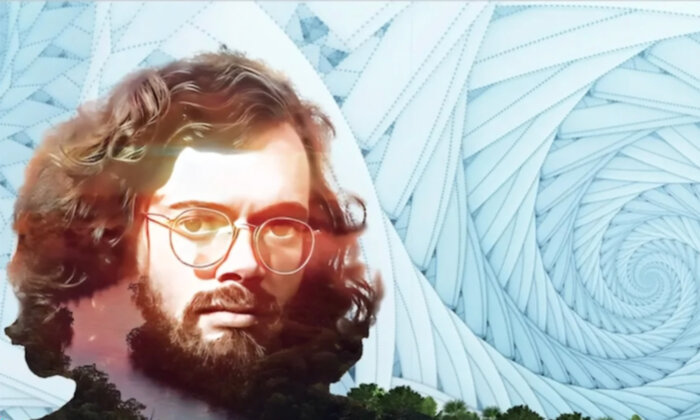
In his first recorded appearance at the Esalen Institute, the Big Sur-based educational hub of the human potential movement from the 60s onwards, he was candid about his novice episode a generation earlier: “I was appalled.” There is a “declension of gnosis” that proved to him in a moment that “right here and now, one quanta away, there is raging a universe of active intelligence that is transhuman, hyperdimensional, and extremely alien.” The revelation was spellbinding for Esalen seminarians and those congregating at other venues like California’s Institute for Integral Studies, where DMT was promoted as “the center of the mystery.” The pied piper began to pass his pipe to countless willing recipients.
In McKenna’s psychedelic pedagogy, DMT is far less like a drug that you take than an event that happens to you. The experience was received as a form of initiation into a secret that cannot be known. It would be contended that DMT possesses a “self-erasing mechanism,” and was so “contra-intuitive” that as one returns from the experience, it escapes rational apprehension.
But as impossible as it was to haul his catch back across the dimensional divide and retain the freshness of its existential verisimilitude, McKenna enjoyed the thrill of the challenge. So too his audience. “Gone, gone, gone, gone,” an Austin crowd was informed in August 1996, primed that DMT causes a response remote from the expectations standard to the unitary mystical experience. There is no white light, or transcendent Oneness. No “effulgent radiance of the unitary.” By contrast, there is “a domain of much greater complexity than one has ever experienced before.” After a couple of tokes, “you will make more spiritual progress in those 30 seconds than 15 trips to India to worship at the feet of the Master.” According to the initiate, rather than reinforce beliefs or buttress intellectual constructs, the enigmatic content of the visions is declared to prompt a lasting insight. “Your constructs are not a bridge to reality, they’re a boundary against reality.”
For the neophytes in his audience, the figure once deemed “America’s shaman” was instrumental in telegraphing DMT’s grail-like status in modern culture. The molecule held a “secret,” compelling a desperate Burroughs to ply the Amazon in the early 50s, originally chasing yagé and later injecting a crude DMT synthesis he called “Prestonia,” unleashing a nightmare in Tangier in 1961. Through Burroughs, it attracted the interest of psychologist Timothy Leary and his Harvard colleagues, who, injecting the compound with attention to set and setting, concluded that it was more of a “transcendental trigger” than a “nightmare hallucinogen.” Soon after, DMT becomes the “metaphysical reality pill” of bold chemist Nick Sand. The next link in the chain, from the mid-60s, is forged by McKenna and his brother Dennis, whom it astonishes and for whom the molecule is deemed a key that unlocks consciousness itself.
Next to other mind-expanding compounds, notably LSD, DMT has long lain in obscurity. A fast-acting and dramatic effect on perception commanded reverence among small cohorts through to the 80s and 90s — a circumstance inhibiting popular use. Aided by the availability of new botanical sources, extraction techniques, improved methods of use, and later, the advent of the Net, McKenna packed the pipe of knowledge and sent it round.
Throughout the 80s, his audiences were informed that the source that had compelled the brothers to trek to the Amazon could be accessed in their own backyards. One needn’t travel “five hundred miles up a jungle river and live with primitive peoples and study techniques for thirty years,” the Fort Mason audience heard. “If I had a pipe loaded with [DMT] in my hand, each one of you would be thirty seconds away from … this absolutely reality-dissolving, category-reconstructing, mind-boggling possibility.” By virtue of possessing a set of lungs, the secret was only seconds away.
A master class on comparative psychedelics, the 1988 CIIS workshop “Ethnobotany of Shamanism” offered about as comprehensive a phenomenology of DMT as one is ever likely to meet. In this seminarian tour de force, the hallucinogenic impresario served as a metaphysical “sitter” for novice attendees. As McKenna related to his audience, even before hitting his advised 70 milligrams of DMT (a very strong dose) vaporized in a glass pipe, the atmosphere is reported to change. It is as though “time speeds up.” There is “backwash from the event about to happen.” The trepidation is palpable. There are chills, tremoring, a knotted stomach, nausea, restlessness. And then you get “the Q phenomenon,” which in engineering circles refers to vibration in a physical system:
When they launch the space shuttle, if you listen to the radio chitchat they will say, “Approaching max Q,” then they’ll say, “Max Q, mark,” and then they’re through that. What that means is that as the system approaches a transition it begins to shake, it begins to shake as though it’s going to shake to pieces. The Q forces are building on all the air surfaces, the airframe. Then you break through that, Q falls to 0 and then you’re in the cool, main engine cut off. You are now in orbit, all vibration has ceased, noise has ceased. You are in orbit, you are weightless, you are there. It’s different.
Replete with the pre-transorbital nomenclature of a space launch, the “Q phenomenon” carries an evocative set of metaphors ripe for application to the DMT trip. Such technical discourse primed Spaced Age audiences for the launch and breakthrough. “So, you take, let us assume, a third toke, long and slow. You vaporize. And you take it, in, and in and in, and there’s a sound like the crumpling of a plastic bread wrapper, or the crackling of a flame. And a tone. A hummmmmmmmmmmmmmm.”
It wasn’t simply the hyperspatial parameters and ontological implications of the DMT molecule that warranted attention. And it wasn’t just that DMT could be grown and harvested in one’s own backyard, extracted in your basement, or smoked in your living room.
What also struck McKenna was that the molecule, in small traces, naturally occurs in the brain. Along with analogue tryptamines (5-MeO-DMT and bufotenine), DMT is present in the brain tissue of humans and other mammals, where it is admitted passage across the blood-brain barrier, where it has a known affinity for a symphony of (principally serotonin-family) receptors. As the brothers marveled, ordinary amine levels in the brain are rapidly metabolized following the introduction of the most powerful of all hallucinogenic indoles. This remarkable fact, McKenna averred, suggests “a long co-evolutionary association” between humans and certain hallucinogenic tryptamines.
The mystery expanded upon the recognition that “nature is drenched in DMT,” that the molecule could be found at tiny but detectable levels in all biota — if, as Dennis averred, “anyone bothered to look.” At the turn of the 90s, fired by speculation on DMT’s mammalian endogeneity, attention turned to the pineal gland. Throughout history, the tiny pinecone-shaped gland in the center of the brain has been a site of competing visions on the human condition: depending on your views, an organ of gothic hopelessness or one of spiritual evolution. In the pen of Hunter S. Thompson, even Fear and Loathing’s Dr. Gonzo wouldn’t touch “extract of pineal.”
By contrast, the gland held an allure for psychiatrist Rick Strassman, who proposed that it is the site for the production of the “spirit molecule.” Though unproven, this popular proposition was prompted by the clinical psychiatrist’s mid-80s “working session” with McKenna and parapsychologist Rupert Sheldrake.
Two decades later, like a secret chief investigator, McKenna found himself in the company of maverick scientists for whom the research appears to have waited.
Smoking DMT at this time, Sheldrake reported an “astonishing” near-death experience. “I felt myself going through a kind of tube,” which turned out to be a huge chrysanthemum, a “portal” into a realm of “light, joy and bliss with shimmering and ever changing forms.” When Sheldrake described the chrysanthemum effect to McKenna afterward, his friend recognized the space: “Ah, you’ve been to the flower heaven.” The sensation inspired the cover of Sheldrake’s later book, “Ways to Go Beyond and Why They Work.”
The function of the pineal gland had long been a subject of intrigue. Before television was considered a cultural disaster, McKenna observed in the late 60s how TV “opened the collective third eye of humanity,” a mythos not unrelated to the pineal’s undiscovered function. As was meditated on in “Post Electric Thought,” “the problem awaits research.” Two decades later, like a secret chief investigator, McKenna found himself in the company of maverick scientists for whom the research appears to have waited. The “working session” led to a series of productive conversations. Sheldrake, who for his biochemistry doctorate had studied the breakdown of the amino acid tryptophan in dying plant cells, was struck by how tryptamine — and notably the DMT molecule itself — is a product of tryptophan, gaining the impression that tryptophan precursors must exist in the pineal. The idea that the pineal “could flood the brain with DMT” at the moment of death was mooted with Strassman at this time.
Strassman’s subsequent FDA-approved research at the University of New Mexico represented the first clinical trials with psychedelics in the United States for a generation. Documenting trials in which sixty volunteers were injected with DMT, the speculations in his popular book DMT: The Spirit Molecule rippled through the underground and solidified as folk knowledge. With McKenna serving as its midwife, the “psychedelic pineal gland” thesis was born. The thesis proposed that the pineal excretes DMT during extremely stressful life episodes, notably during birth and death. As a projection of Strassman’s then-relationship with Tibetan Buddhism, pineal DMT was even seen to serve a role in reincarnation.
The idea of the “brain’s own psychedelic” became a self-fulfilling prophecy in film, TV, and music in the wake of Strassman’s popular speculations, a kind of chemical Frankenstein’s monster into which McKenna had breathed life. Despite research finding traces of DMT in the brains of rats, the pineal is an unproven source of endogenous DMT in psychoactive quantities. The long moratorium on research was far from over. As researchers were aware of the occurrence of DMT in human metabolism since the 70s, the absurdity of criminalizing a molecule that naturally occurs in humans was never lost. “This is the Catch 22 that they hold in reserve if they ever have to come after us,” echoes McKenna’s sound bite. “You are holding, and you can’t stop yourself.”
Source: The Reader
God Bless Uncle Terry


Comments
Post a Comment